
SAVE Act Would Not Affect Election Outcomes
But failure to enact ID requirements undermines voter trust

Paul E. Peterson, senior fellow, Hoover Institution; Henry Lee Shattuck Professor, Harvard University.
“It will guarantee the midterms. “If you don’t get it, big trouble, my opinion. . . . I don’t think we should approve anything until this is approved.”
Donald Trump, president
“[This is] one of the most despicable pieces of legislation I’ve come across in the many years I’ve been a legislator. . . Nothing is more important than defeating this dagger to the heart of our democracy.”
Chuck Schumer, Majority Leader, Senate (Dem.)
The federal angle
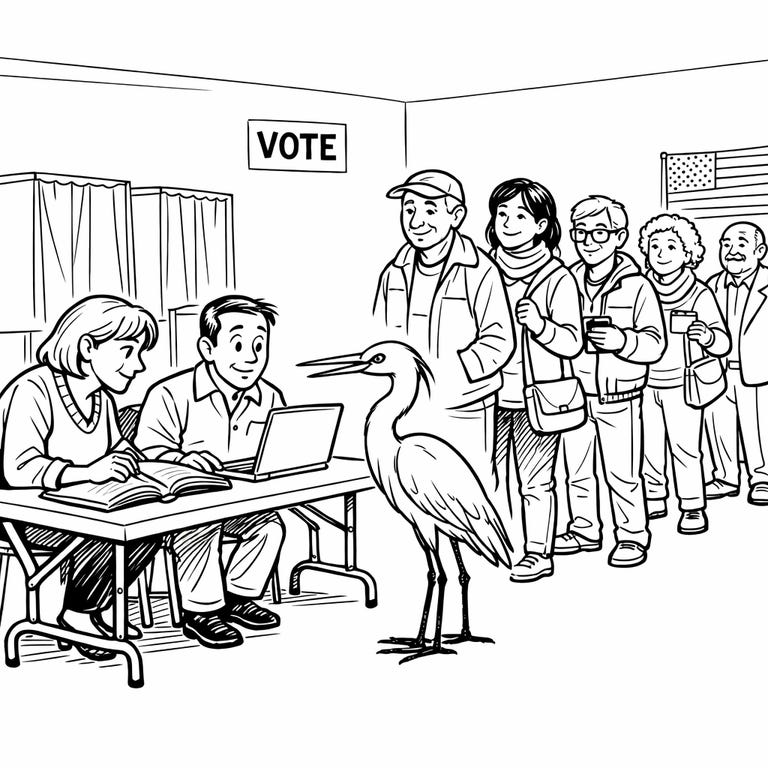
Senate Majority Leader Chuck Schumer claims that a voter identification (ID) law would destroy democracy. Yet Australia, France, Germany, Iceland, Italy, and Ireland, and nearly all other democracies demand documentary proof of voter identity. In fact, 71% of the 246 countries and other jurisdictions across the world have strict “voter ID laws [that require] photo ID cards.” Using the filibuster to block common-sense legislation consistent with widely accepted democratic practices defies common sense.
Worse, the Republican claim that SAVE is necessary to save the country from election malpractice. Ineligible voters have very little incentive to break the law by casting a ballot, and eligible voters have even less reason to cast multiple ballots. One vote is hardly likely to determine the outcome of an election, and one illegal vote, if discovered, could lead to a fine or time in jail. The conservative Heritage Foundation’s tally of legally determined election fraud shows “1,546 proven instances” over many years. That’s hardly a democratic crisis.
Academic studies of the effect of ID laws on election outcomes seldom detect differences of a magnitude that could affect outcomes of any but the closest of elections. A 2014 study found that Kentucky voters, when informed of a recently enacted voter ID law, were more likely to vote, though by only one percentage point. Another study found the net effect of ID laws on turnout worked to the advantage of Republicans in primary elections — but not in general elections. When another team of scholars analyzed the same data with better methods, they found the data so uncertain one could reach the conclusion that either party could be a tiny net beneficiary of ID laws.
The potential effect of SAVE on election outcomes has been estimated by looking at the demographic characteristics and partisan affiliations of voters who might be affected by the law. A Washington Post survey found rural voters were less likely to have passports, suggesting that Republicans, with their strong base in less populated areas, would suffer disproportionately. Others who were likely to be adversely affected include those who were “male, working-class and first-time voters,” groups who “have lower education levels and less access to documentation.” Those demographic groups that also have become increasingly Republican in their voting habits. The Center for Democracy and Civic Engagement (CDCE) at the University of Maryland conducted a survey that showed 2% of adults lacked proof of citizenship. Men were nearly three times as likely as women to say they lacked an ID. But they also found that Democrats who voted in 2020 were 3 percentage points more likely to say they lacked easy access to proof of citizenship than comparable Republicans. The authors concluded that “many Americans of all political identities lack” documentary proof of citizenship.” It calls for more research to “understand how, if at all, the SAVE Act would impact election outcomes.”
Stanford turnout expert Justin Grimmer gives three explanations for why voter ID laws make little difference:
1) Most voting rules, including ID laws, are “relevant only to a small number of people.” Most people carry IDs — driver license, food stamp card, or some alternative — to purchase their groceries, rent an apartment, open a bank account, or purchase gasoline. The University of Maryland team estimates that only two percent of the potential electorate lacks documentation.
2) Voters who have no ID “may fail to vote for more reasons” than just a lack of documentation. They may be poorly educated, socially isolated, and disengaged from politics, factors that depress the chances of turning out on election day even if the rules do not require a driver’s license or some other proof of citizenship. In these circumstances the ID makes no difference.
3) Laws fall equally on voters of both parties. Should “voter ID laws decrease turnout by a small percentage, these laws [would] affect [both] . . . Democrats and Republicans.” Only the differential effect gives one party an advantage. Given the limited effects and the uncertainty of just which voters would be most affected, it is “impossible for lawmakers to predict accurately” the impact of the legislation they are considering. Thus, Senate Democrats don’t know whether they are fighting against their own political interests, and neither do Senate Republicans.
Still, it is important to find a way to reach bipartisan consensus in support of a national law that requires voter ID documentation, as establishing that principle could help restore the country’s trust in its electoral system. According to the Yankelovich Center at the University of California at San Diego, trust that “votes will be counted accurately nationwide” declined from 71% before the 2024 election to 60% in February 2026. The downward trend was noticeable for was especially large for Democrats. Another survey found similar results when it asked whether the person interviewed was confident “your state/local government will run a fair election.” It found confidence declined from 76% in 2024 to 66% in early 2026. That a third of the population lacks confidence in its electoral system is just one facet of the rising distrust of governmental institutions since the beginning of the 21st Century.
The SAVE bill need not be partisan. Enacting a voter ID requirement by an overwhelming bipartisan vote would take a big step toward restoring trust in elections.
__________________________________________________________________
Paul E. Peterson is a senior fellow at the Hoover Institution, Stanford University and the Henry Lee Shattuck professor of government at Harvard University.